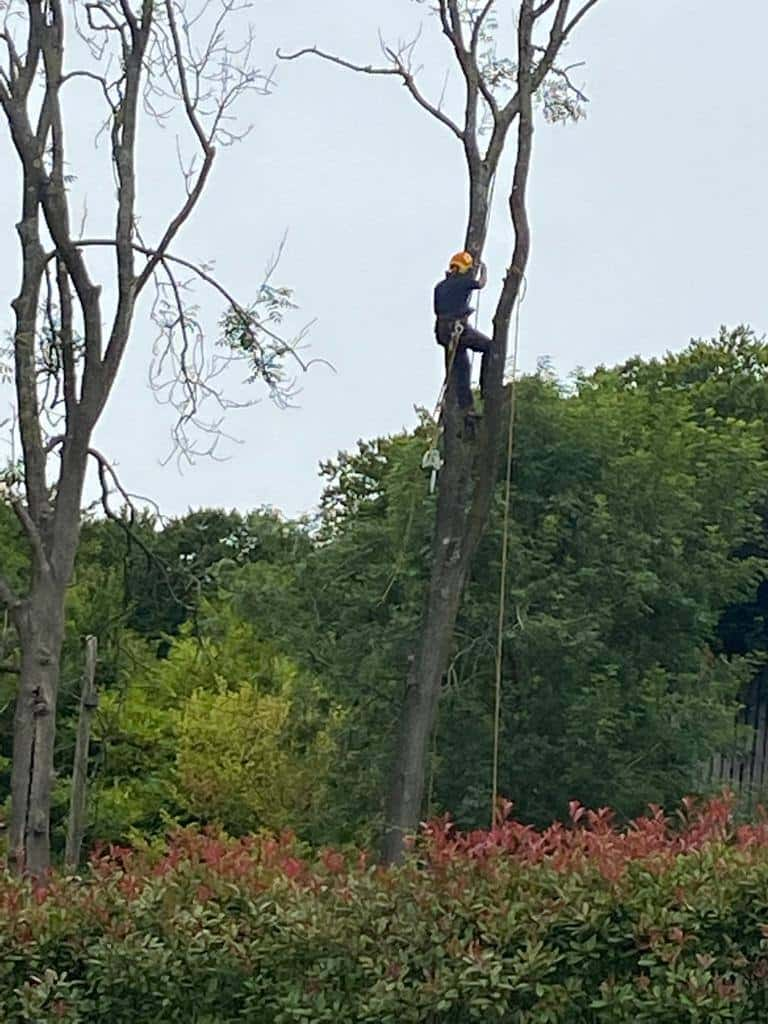
Tree felling can significantly change the appearance and layout of a garden, particularly when the tree is large or surrounded by established plants, lawns and outdoor features. While removing a tree may be necessary because of its condition, position or impact on the property, homeowners often want to understand how the work will affect the surrounding area.
Professional tree felling involves more than simply cutting down a tree. Careful planning helps protect nearby plants, garden structures and surfaces while allowing the tree to be removed in a controlled manner.
For homeowners in Newmarket, Suffolk, understanding what happens during the process can help prepare the garden and make it easier to plan any improvements afterwards.
How Tree Felling Can Affect the Surrounding Garden
The extent of disruption depends on the tree’s size, its location and the available working space. A tree in an open lawn may be relatively straightforward to remove, while one positioned close to fences, sheds, flower beds or neighbouring trees requires more careful planning.
Professional tree surgeons assess the surrounding environment before starting work. This helps determine the safest removal method and identify areas that may need protection.
Impact on Lawns and Ground Surfaces
Tree felling may involve workers moving around the garden with equipment, while machinery may be needed to handle larger sections of timber. This activity can affect lawns, particularly when the ground is soft or wet.
Repeated foot traffic and equipment movement may leave flattened grass, compacted soil or temporary marks on the surface. Where access is restricted, protective ground coverings can help reduce disturbance.
The removal of heavy trunk sections can also affect the ground if they are dropped or moved without suitable control. A planned approach helps minimise unnecessary damage.
Effects on Nearby Plants and Flower Beds
Trees often grow close to shrubs, borders and established garden planting. During felling, branches and sections of the canopy need to be lowered or directed carefully to avoid damaging nearby vegetation.
In gardens with limited space, some temporary clearance may be necessary to create a suitable working area. Professional tree surgeons consider the position of surrounding plants and use appropriate techniques to reduce the risk of impact.
Once the tree has been removed, homeowners may also notice changes in sunlight reaching previously shaded planting areas.
Protection of Fences, Sheds and Garden Features
Garden structures can be vulnerable when a tree stands close to them. Fences, greenhouses, patios, garden walls and sheds may be affected if branches or timber sections are not controlled properly.
Where there is insufficient room to fell a tree in one direction, sectional dismantling may be more suitable. This involves removing the tree in smaller sections, often using ropes and controlled lowering techniques.
Careful planning helps protect nearby features and reduces the likelihood of avoidable damage.
What Happens to the Tree Debris?
Tree felling produces branches, smaller twigs, foliage and sections of trunk that need to be managed once the tree has been removed.
The branches are generally separated from the main trunk and processed into manageable pieces. Depending on the work agreed, timber may be cut into logs, while smaller branches can be chipped using specialist equipment.
The resulting wood chips may sometimes be retained for garden use, such as creating mulch for suitable planting areas. However, fresh wood chips are not appropriate for every application, so their intended use should be considered.
A clear plan for handling and removing the debris helps prevent the garden from becoming unnecessarily obstructed after the work.
Will Removing a Tree Change the Garden Environment?
Tree removal can have an impact beyond the immediate working area. Mature trees provide shade, shelter and habitats for wildlife, so their removal may change the conditions within the garden.
Increased Sunlight
Once a tree has been removed, areas that were previously shaded may receive more direct sunlight. This can benefit some lawns and plants, although others may struggle if they are not suited to brighter conditions.
Homeowners may need to reconsider planting arrangements or introduce suitable plants that can tolerate the new environment.
Changes to Shelter and Privacy
Large trees can provide screening from nearby properties and protection from wind. Their removal may leave parts of a garden more exposed.
Where privacy or shelter is important, replacement planting or alternative garden screening can help restore some of these benefits.
Changes to Wildlife Habitats
Mature trees can provide nesting areas, food sources and shelter for birds and other wildlife. Removing one may therefore affect the habitats available within the garden.
Before work begins, the tree should be checked for signs of active nesting or other wildlife activity. Planning the work carefully helps take account of the surrounding environment.
How Professional Tree Surgeons Minimise Garden Disruption
The condition of the garden and the position of the tree influence how the work should be carried out. Professional tree surgeons assess access, surrounding structures, ground conditions and nearby vegetation before choosing an appropriate method.
Where space allows, a tree may be felled in a controlled direction. In more restricted gardens, sectional dismantling can allow branches and trunk sections to be lowered individually.
Other precautions may include protecting vulnerable surfaces, establishing a suitable working area and planning how timber and debris will be moved out of the garden.
For properties in Newmarket, Suffolk, professional planning helps ensure that tree felling is carried out efficiently while limiting unnecessary disturbance to the surrounding outdoor space.
What Happens to the Garden After Tree Felling?
Once the tree has been removed and debris cleared, homeowners can assess the area and decide how to use the newly available space.
Some may choose to restore the lawn, introduce new planting or create a seating area. Others may arrange stump grinding to remove the remaining visible stump and make the ground easier to manage.
It is worth remembering that tree roots can remain underground after felling. The extent of any remaining roots depends on the tree and the removal method, so this should be considered before planning major landscaping work.
Conclusion
Tree felling can affect lawns, planting, garden structures and the overall environment of an outdoor space. However, careful preparation and professional removal techniques can help minimise disruption and protect the features surrounding the tree.
If you are considering removing a tree from your property, Newmarket Tree Surgeons can assess the location, explain the most suitable approach and carry out the work with care. Contact the team to discuss your tree felling requirements and plan the next steps for your garden.
Call us on: 01638 591 692
Click here to find out more about Newmarket Tree Surgeons
Click here to complete our contact form and see how we can help with your tree needs.